A prompt is not a contribution record.
Attribution needs a reconstructable account of sources, choices, transformations and human judgment—not a prompt saved in isolation.
 Dr. Benjamin Harvey
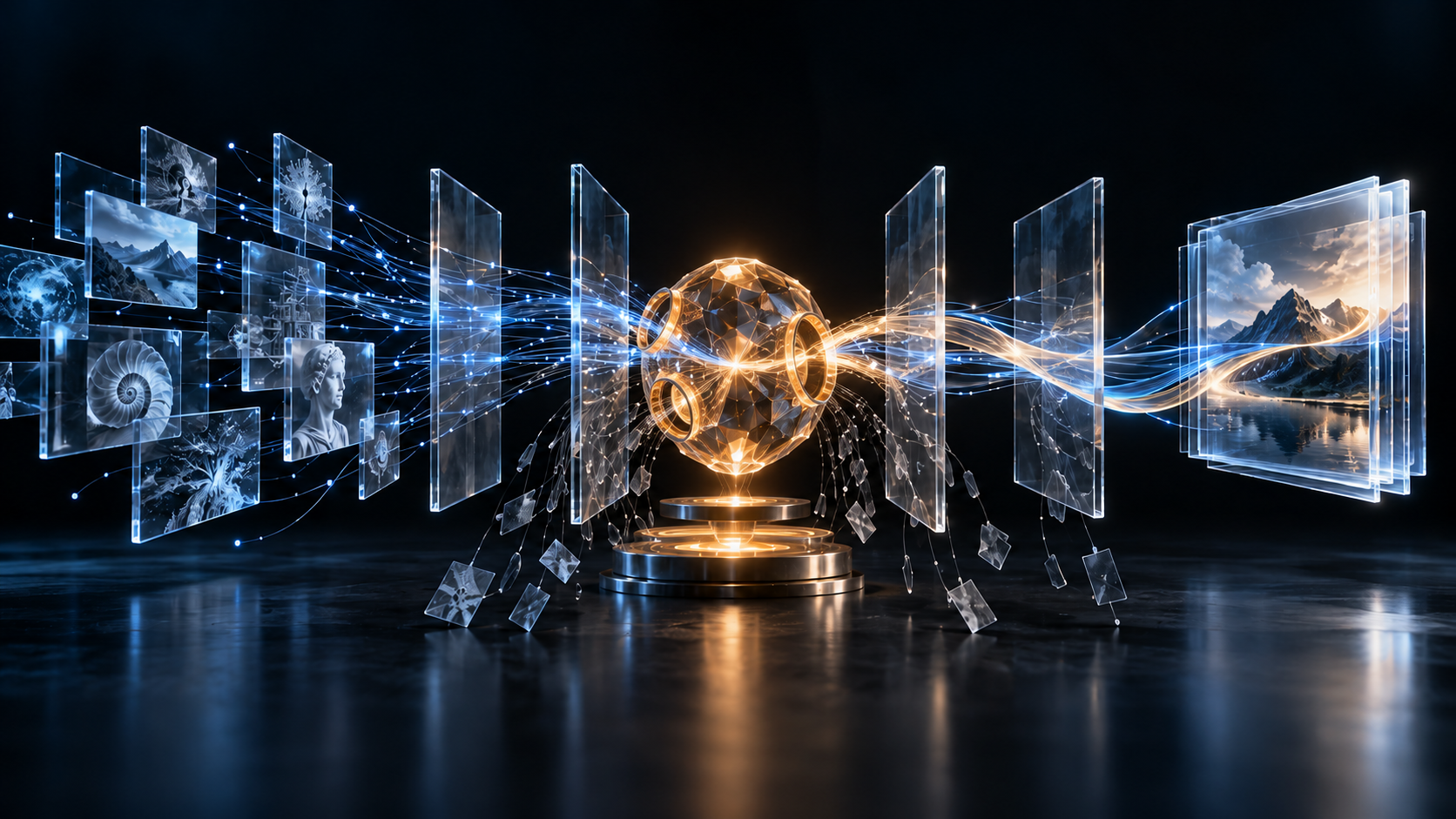
Watch the 42-second visual essay
The prompt is one event
When an AI-assisted work becomes important, teams often save the prompt and call that provenance. The prompt matters. It may show an instruction, a constraint or the beginning of a search. But it does not show the full contribution path.
It does not capture which source versions were available, which passages were actually used, what the model returned, what a person rejected, what they rewrote, how outputs were arranged, or why one branch became the final work. A prompt saved without those events can be precise and still be incomplete.
That is why I would treat the prompt as one record in a larger evidence graph—not as a proxy for authorship, inventorship or permission. Those are separate questions, and some are legal determinations.
Model the work as entities, activities and agents
The W3C PROV family offers a useful foundation. Its model describes provenance through entities, activities and agents. That structure is deliberately broader than a chat transcript. It can represent a source document, a transformation, a reviewer, a generated draft and the relationship among them.
C2PA 2.4 provides another relevant layer for digital assets. Content Credentials can bind assertions about ingredients, actions and asset history to content in a verifiable record. Its April 2026 specification also adds a JSON-based representation designed for interoperability testing and validation reporting.
Neither standard, by itself, tells us the significance of a human contribution. But together they point toward the right engineering question: can the creation process be reconstructed from versioned evidence rather than inferred from the final file?
Record the choices that changed the work
A practical contribution record should connect the exact source versions, model and tool versions, instructions, outputs, human edits, selection and rejection events, transformations, timestamps and reviewers. It should preserve branches instead of pretending the path was linear. It should also mark what was not captured.
The U.S. Copyright Office's January 29, 2025 report on AI copyrightability is a useful reminder that this distinction has consequences. The Office's analysis centers human authorship and explains that prompts alone generally do not provide sufficient control over expressive elements, while human selection, coordination, arrangement or modification may matter depending on the facts. That is a copyright analysis, not a universal attribution rule. Still, it reinforces an operational lesson: evidence of human contribution needs more fidelity than a prompt log.
Evaluate reconstruction, not just similarity
The test I would run is simple. Give an authorized reviewer the final asset and its contribution record. Can they identify the relevant source versions, material transformations, human decisions, model-assisted steps and unresolved gaps? Can a second reviewer reach a comparable technical assessment from the same evidence?
Then measure the burden and the failure modes: reconstruction time, missing events, reviewer agreement, unsupported attribution, unnecessary holds and legitimate task completion. A high similarity score may locate a relationship worth examining. It cannot reconstruct the creative process or decide the legal significance of a contribution.
My current AI IP attribution program treats this as an active research and product-design question. The public record includes research briefs, technical proposals and proposed experiments—not a claim of completed accuracy or a legal conclusion.
Before relying on a prompt log, ask: could another authorized reviewer reconstruct what actually changed the work?