Let AI draft without letting it send.
Your knowledge portfolio should capture the decisions you keep—not just the tasks AI can help prepare.
 Dr. Benjamin Harvey
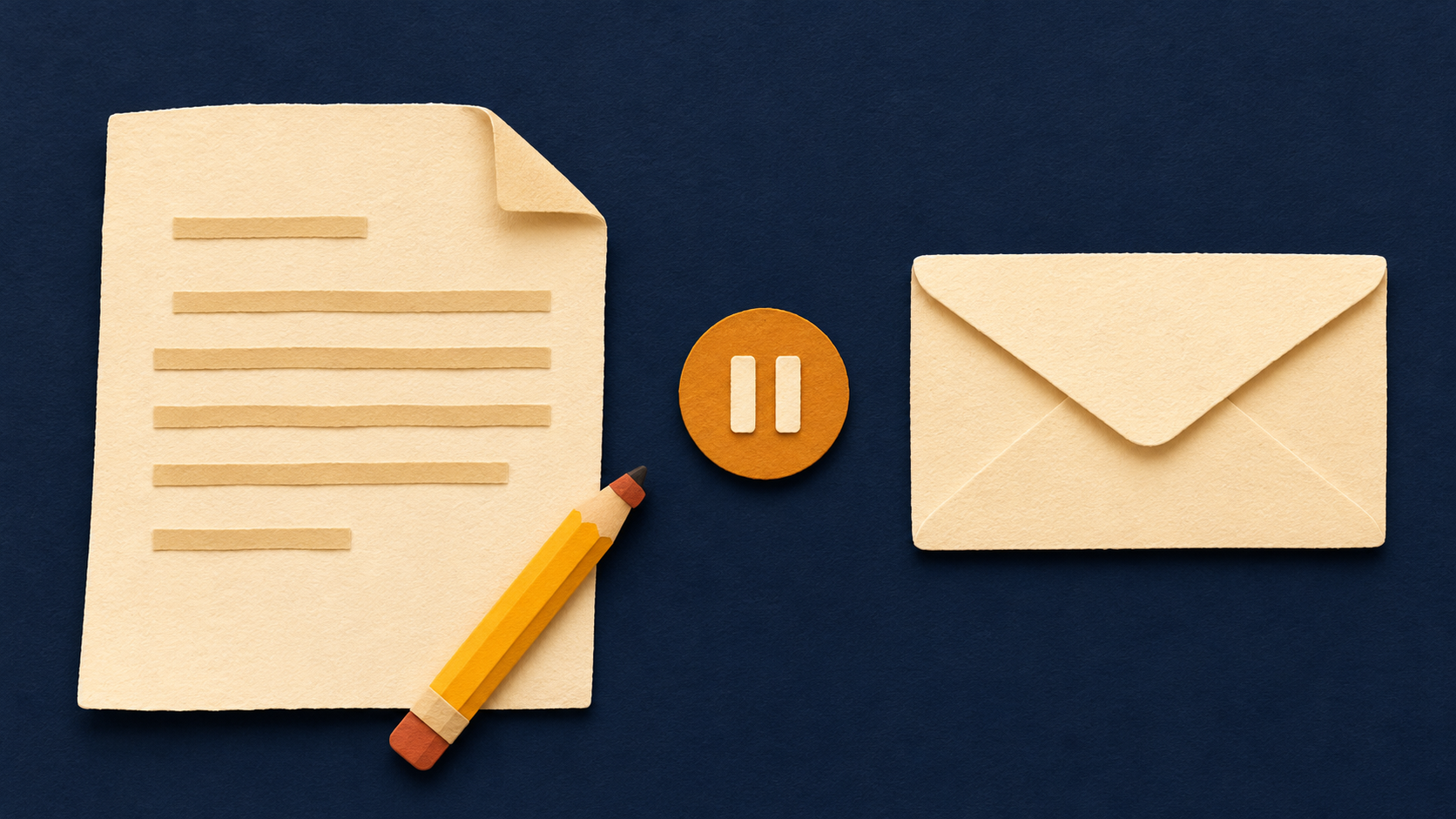
Watch the 42-second draft-versus-send lesson
Two different permissions
You ask AI to help write a message. Does that also mean it should send the message? For an everyday user, this is one of the most useful questions in AI governance. Preparing an answer and taking an action are different kinds of work.
As you build a knowledge portfolio, do not document only the steps you follow. Capture the points where you pause, check details, or ask someone else to decide. Those boundaries are part of your judgment. A beautifully written workflow can still be incomplete if it leaves them out.
Try a fictional customer reply
Imagine a small craft business preparing a reply about a custom order. The owner wants AI to make the wording clear and friendly. The owner has not yet checked the delivery date, approved a discount, or confirmed the recipient.
For practice, use an entirely fictional order with made-up details. Ask AI to draft a response with visible placeholders for the unanswered questions. Do not connect a real inbox or provide customer information for this exercise. The useful result is a reviewable draft, not a sent message.
Now mark three decisions that remain yours: which facts are confirmed, what commitments you are willing to make, and whether this exact version should go to this exact recipient. If the draft invents a delivery promise, remove it and save the reason for that correction.
A request is not a technical control
You might write: “Draft only. Do not send. Mark anything I need to confirm.” That instruction makes your intent clear, but wording alone is not proof that a connected system cannot act. Check the actual tool permissions, account access, approval settings, and available activity records before using an action-capable assistant.
For a beginner's exercise, keep the task in a draft-only setting without access to send messages. If you later use a connected workflow, learn how its approval step works before relying on it. Review the recipient, attachments, commitments, and final text together. Approval of an earlier draft should not be silently treated as approval of a changed message.
This is where cybersecurity and AI governance meet everyday practice: what a system can access and what a person intends it to do should be examined separately. A friendly interface does not answer either question by itself.
Save the boundary in your portfolio
NIST's 2023 AI Risk Management Framework, MAP 2.2, calls for documenting knowledge limits and how people will use and oversee AI outputs. MAP 3.5 addresses defined and assessed human-oversight processes. The fictional exercise here is an original teaching adaptation of those ideas, not an official NIST procedure, a security certification, or a measured result.
Add a short boundary note beside your sample: AI helped prepare wording; I verified the facts; I decided which commitments were appropriate; no message was sent during this exercise. Keep the draft and your reviewed version so someone can understand your contribution. This is a record of your work, not a guarantee of ownership, protection from copying, or future licensing income.
The goal is not to avoid useful AI. It is to learn where assistance ends and your decision begins. Today, take one fictional message and identify the exact point where drafting must stop for your review. Save that decision with the work.