Save the correction, not just the answer.
Your edits can reveal the judgment an AI draft missed. Keep a before-and-after pair—and explain the change.
 Dr. Benjamin Harvey
Watch the 42-second correction exercise
The useful part may be the edit
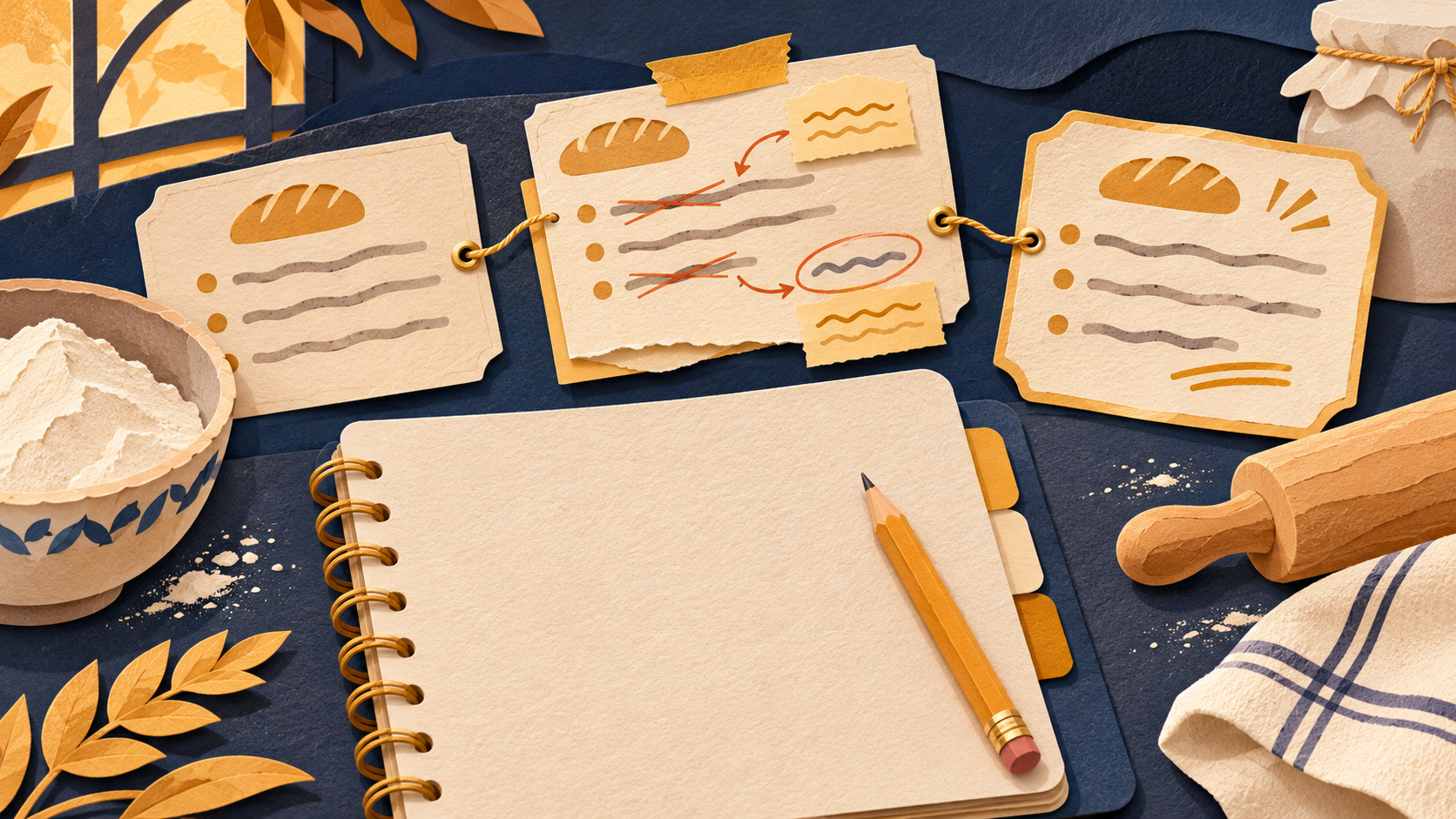
Imagine a baker asking AI to organize a checklist for taking custom orders. The first draft looks polished. But it leaves out a question the baker always asks: when does the customer actually need to collect the order? The baker adds that question, moves it earlier, and explains why the timing matters.
That small correction captures something the smooth draft missed: practical judgment. If you save only the final checklist, a future reader cannot easily see what came from your experience and what the tool supplied. Saving the correction gives that contribution context. This fictional example is a learning exercise, not a report of measured business results.
Make a before-and-after pair
Choose one ordinary, low-risk task you know well. Use a fictional example with no customer names, private employer material, or confidential methods. Give AI your own rough explanation and ask it to organize the material without inventing steps. Save that draft before you edit it.
Now look for three things: a missing question, an assumption that does not fit your situation, and a step that needs an exception. You do not have to find all three. If a change is unnecessary, do not invent one to make the exercise look impressive. Correct what you can explain and mark what you cannot verify.
Save your reviewed version beside the first draft. Add a short note: “I changed this because…” A useful note identifies the actual decision, not just a claim that you made the document better. For the fictional baker, that might mean explaining why collection timing belongs before the order is confirmed.
A small record with a clear purpose
Keep the original explanation, the AI draft, your corrected version, and the reason for each important change. Include the date and tool used. When an outside source informs an edit, retain the link and describe which part it supports. Keep records private unless you have checked that sharing is appropriate.
Researchers call information about how something was produced provenance. The W3C PROV overview, dated April 30, 2013, describes provenance through the things, activities, and people involved in producing an output. A beginner does not need to implement its technical vocabulary to understand the question: where did this come from, and what happened to it?
This before-and-after exercise is my practical synthesis of that idea, not a W3C certification or official template. A record can be incomplete or mistaken. Your note should make an assessment possible, not demand that a reader accept your claim.
Review is work, not a button
NIST's AI Risk Management Framework calls for documenting an AI system's knowledge limits and how people use and oversee its outputs. Applied to this small exercise, the lesson is to state what you checked and where your review stops. Checking the order of a checklist is not the same as verifying every statement in it.
This connects everyday AI use with attribution research: we need evidence of contributions and transformations, not just a polished final artifact. It also keeps the promise realistic. A version history is not an automatic ownership determination, a barrier against copying, or a guarantee that someone will buy the material. Those are separate questions.
Your action today is simple: open one AI-assisted draft, make one justified correction, and save the before-and-after pair with a sentence explaining your reasoning. A knowledge portfolio becomes more useful when it shows how you think—not merely what a model can write.