Start your knowledge portfolio with one task.
Use AI to organize what you know—then review, correct and preserve your contribution. A practical first step, not a promise of automatic IP protection.
 Dr. Benjamin Harvey
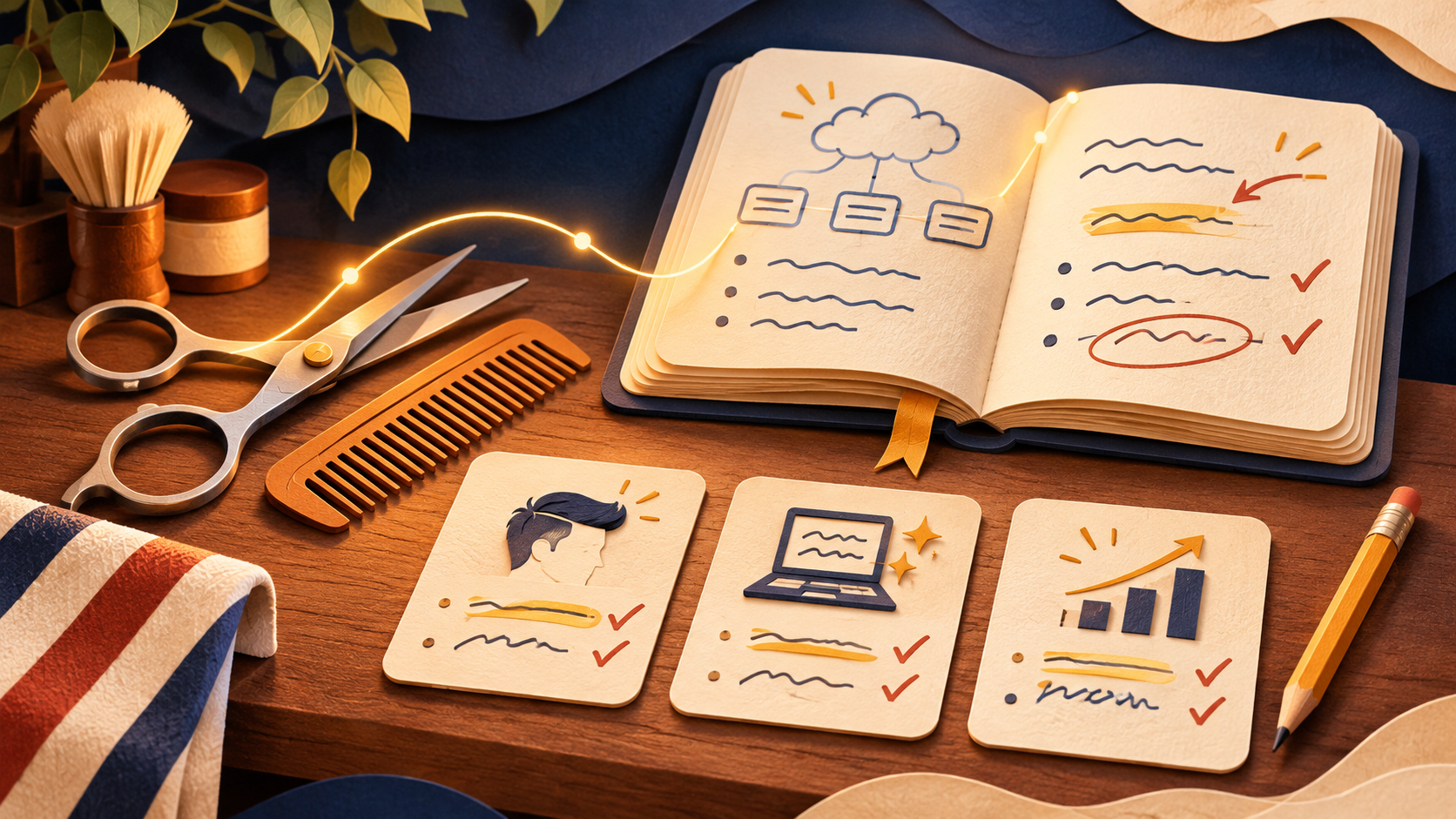
Watch the 48-second knowledge portfolio exercise
Start with something you already do well
You do not need to become an AI engineer to make AI useful. Start with a task people already ask you to explain. Maybe you help customers choose a haircut, organize a community event, or turn a confusing request into a clear plan. The useful material is not just your final answer. It is the judgment behind it: what you notice, what you ask, and when you change your approach.
A knowledge portfolio is a collection of those explanations, examples, and revisions. It can help you teach, improve a process, or show someone how you work. It may eventually support a commercial offering. It is not automatically a legally protected IP package, and it is not a guarantee of income.
Try a ten-minute knowledge interview
Consider a fictional barber creating a consultation checklist. Instead of asking AI to invent an expert guide, the barber supplies their own experience. Start with this prompt: “Interview me about one routine task I know well. Ask one question at a time about my steps, decisions, exceptions, and common mistakes. Do not invent my experience. Flag anything I have not explained.”
Use the first three minutes to describe the task and the person it helps. Spend the next three explaining two ordinary examples and one exception. Ask AI to organize the answers into a short checklist. Then spend the remaining time correcting the draft in your own words. If an AI suggestion sounds plausible but you cannot verify it, mark it as unresolved rather than adopting it.
The immediate result is modest and useful: a reviewed first draft. This is a suggested learning exercise, not a tested intervention or a claim of measured productivity gains.
Keep your contribution visible
Save your original explanation, the AI-assisted draft, and the version you corrected. Add a date, the tool used, what you contributed, and what remains uncertain. If you use outside material, preserve its source and check whether the intended use is permitted. A simple folder and change note can be enough to begin; you do not need a new taxonomy or an expensive platform.
This is everyday AI governance: deciding what information enters the tool, checking what comes out, and retaining responsibility for what you share. It also gives attribution work something concrete to examine. A timestamp or digital signature can help identify a record, but it does not establish ownership by itself or prevent someone from copying the content.
Protect the boundary before you share
Use only information you are entitled to share. Leave out customer identities, employer documents, private contracts, and confidential methods. Review the tool's data-use and retention settings before entering sensitive information; when uncertain, practice with a fictional example instead.
The U.S. Copyright Office's January 29, 2025 report explains that AI assistance does not automatically disqualify a work from copyright, but protection depends on sufficient human authorship; prompts alone do not settle that question. The USPTO explains that trade-secret protection requires, among other conditions, reasonable efforts to maintain secrecy. Documentation and legal protection are related but different tasks.
Before offering a license, clarify which material you control, what rights you can grant, and what the recipient may do. Get qualified advice for the specific arrangement. This article is education, not legal advice.
The reason to start now is practice, not panic. A portfolio is not an established requirement for future employment. Today, pick one safe task, explain it, review the AI-assisted draft, and save your corrections. Build evidence of your judgment one useful example at a time.